reverse osmosis
What Is Reverse Osmosis Water? How It Works And What It Removes
Reverse osmosis water is pushed through a fine membrane that holds back most dissolved material. How RO works, what the CDC says it removes and does not, and how it compares with whole house filters and softeners.
- Juan Molina
- 3 min read
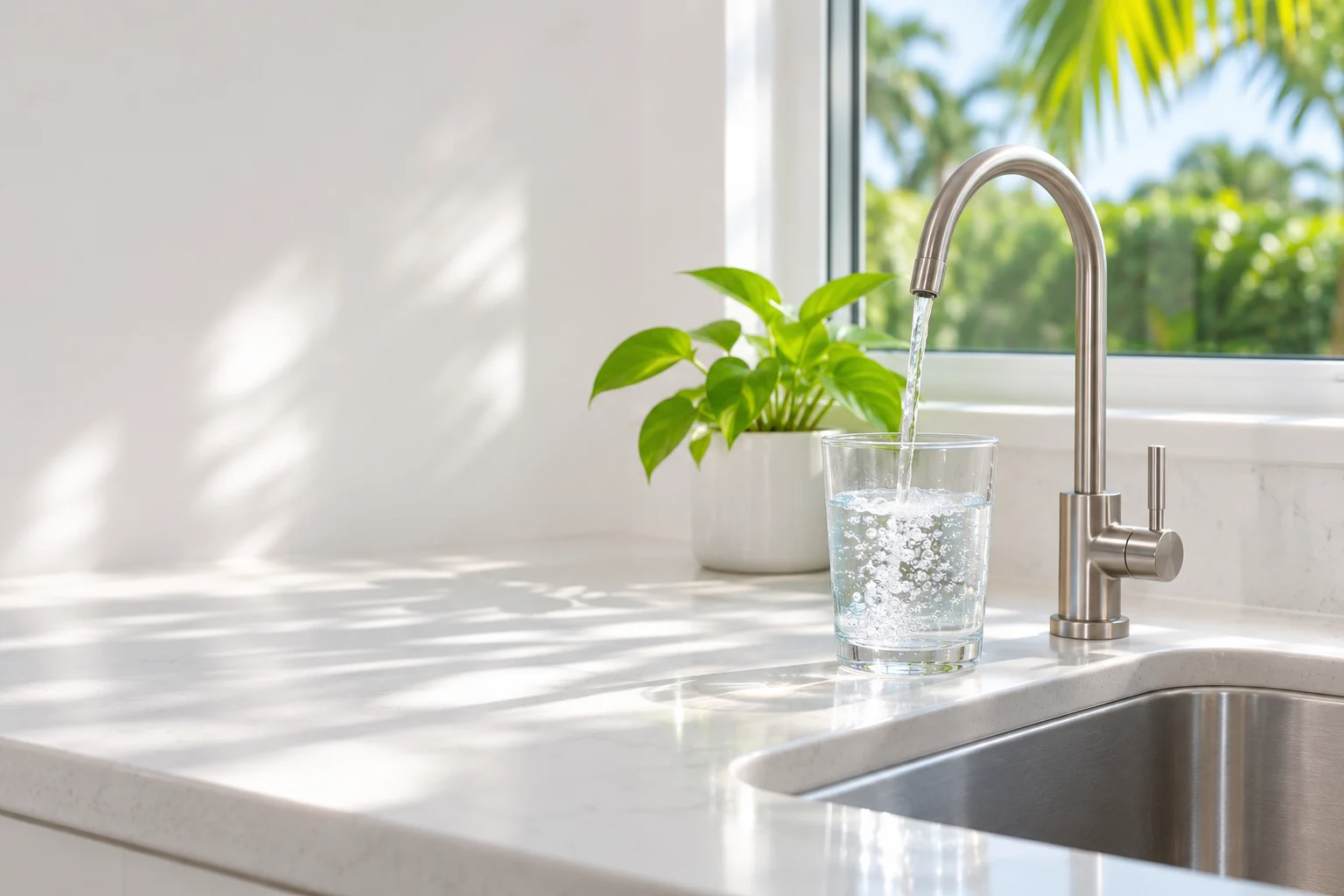
Reverse osmosis water is water that has been pushed under pressure through a very fine membrane that lets water through but holds back most of what is dissolved in it. In a home, that usually means a reverse osmosis (RO) system under the kitchen sink with its own small faucet, used for drinking and cooking water. According to the CDC, reverse osmosis filters remove germs and some types of chemicals.
I get asked about RO in almost every home I visit in South Florida. Here is how it works, what it removes and what it does not, and how to tell if it makes sense for your water.
How Reverse Osmosis Works
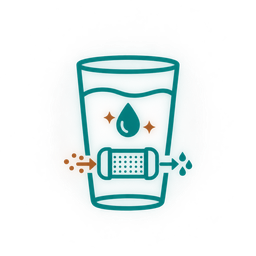
Normal osmosis moves water from the less concentrated side of a membrane to the more concentrated side. Reverse osmosis uses your water pressure to push it the other way, so clean water passes through the membrane and the dissolved material it holds back is flushed down the drain.
A home RO system has several stages. Water usually passes through a sediment filter and a carbon filter first, which protect the membrane, then through the RO membrane itself, and often a final polishing filter before it reaches a storage tank and the faucet. Our H2O-210, for example, is a 4-stage under sink system with a pump-less design and a choice of storage tank sizes.
What Reverse Osmosis Removes
The CDC lists reverse osmosis among the filters that remove parasites, bacteria and viruses. It also says RO filters will remove some types of chemicals, including lead, copper and chromium, and may also reduce arsenic, fluoride, radium, sulfate, calcium, magnesium, potassium, nitrate and phosphorus.
Two points from the CDC are worth knowing before you buy any filter:
- Check the label. Every system is different. Look for the specific contaminants it is certified to reduce, and look for an NSF certification on the label.
- Some removals are trade offs. Some filters remove beneficial chemicals like chlorine, which kills germs in water, or fluoride, which prevents cavities.
Reverse Osmosis Vs Other Water Treatment
- Whole house filtration treats every tap in the home, for showers, laundry and appliances. RO usually treats one drinking water tap. Many homes use both; see whole house water filtration.
- Water softeners deal with hardness, the calcium and magnesium behind scale and spots. They are not drinking water filters. Read how a water softener works and whole house filter vs water softener.
- PFAS. If PFAS is your concern, ask about PFAS reduction and check any system's certification for it specifically.
Is Reverse Osmosis Right For Your Home?
That depends on what is actually in your water. South Florida homes draw on the Biscayne Aquifer, and the issues we see most are hardness, chlorine taste and smell, and concerns about PFAS. The only way to know is to test. We test your tap water in your home before recommending any system, then size the equipment to your water and household. Signs you might want to look closer include scale on fixtures and the other signs of hard water.
Talk To Us About Your Water
We install reverse osmosis drinking water systems across Miami-Dade, Broward and Palm Beach. See our systems, book water quality testing, or request a consultation.