hard water
Signs Of Hard Water: 5 Things To Look For In Your Home
The signs of hard water: crust on faucets, spotted glasses, soap that will not lather, dry skin and stiff laundry, scale in appliances, and how to know for sure.
- Juan Molina
- 3 min read
Signs Of Hard Water In Your Home
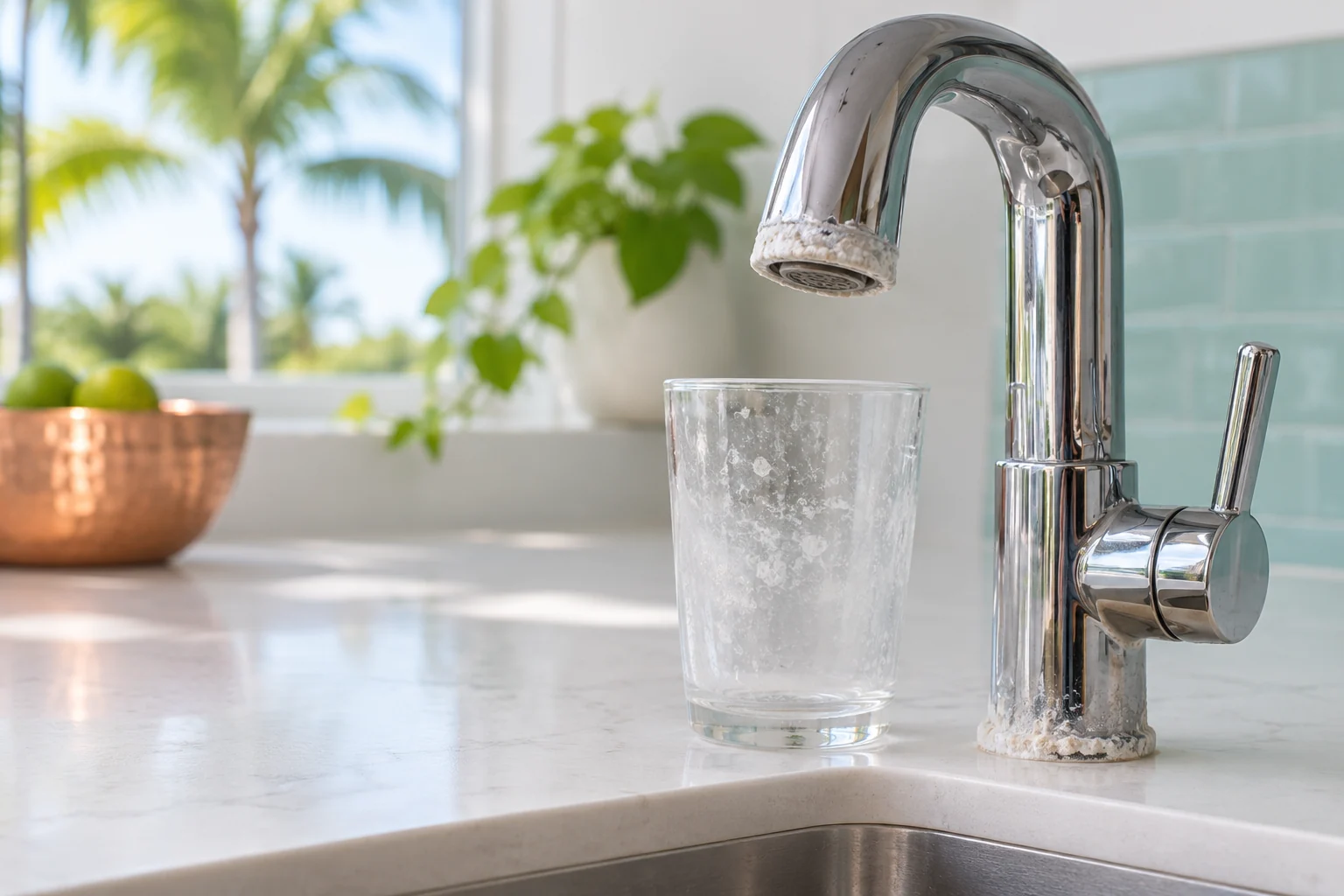
The most common signs of hard water are white crust on faucets and showerheads, cloudy spots on glasses and dishes, soap that will not lather, a film on your skin after a shower, and stiff, dull laundry. All of them come from the same thing: dissolved calcium and magnesium in your water. In South Florida, many homes see some of these signs, and a water quality test is the simplest way to know how hard your water actually is.
Here is what each sign looks like, why it happens and what your options are.
What Hard Water Is
Hard water is water with a high level of dissolved minerals, mainly calcium and magnesium. The U.S. Geological Survey classifies water by how much of those minerals it carries, measured as calcium carbonate:
- Soft: 0 to 60 mg/L
- Moderately hard: 61 to 120 mg/L
- Hard: 121 to 180 mg/L
- Very hard: more than 180 mg/L
The USGS describes the residue hard water leaves behind as not dangerous, but unsightly. The bigger concern for most homeowners is what it does to fixtures, appliances and plumbing over time.
1. White Crust On Faucets And Showerheads
A chalky white or tan buildup around faucet aerators, shower heads and the base of fixtures is mineral scale. As water evaporates, the calcium and magnesium stay behind. Clogged shower head nozzles that spray sideways are often the same scale building up inside.
2. Spots And Film On Glasses And Dishes
Cloudy glasses straight out of the dishwasher, or white spots that dry on dishes, are one of the signs the USGS points to. The minerals dry onto the glass and are hard to wipe off.
3. Soap And Shampoo That Will Not Lather
Hard water reacts with soap and makes it harder to rinse off. You may notice you need more soap or detergent, or that your hands still feel slick after washing, which the USGS also lists as a common sign.
4. Dry Skin, Dull Hair And Stiff Laundry
Soap residue left on skin and hair can leave them feeling dry or filmy. The same residue in laundry can leave towels stiff and colors looking dull after a few washes. A shower filter is one option people look at for the bathroom specifically.
5. Scale Inside Water Heaters And Appliances
This is the sign you cannot see. According to the USGS, when hard water is heated, solid calcium carbonate deposits can form, which can reduce the life of equipment, lower the efficiency of electric water heaters and clog pipes. Coffee makers, kettles, dishwashers and ice makers all collect it too.
How To Know For Sure
The signs above point toward hard water, but they do not tell you how hard it is or what else is in it. A home test strip gives a rough reading. An in-home water quality test measures hardness along with other things that affect taste and smell, so you can see what is actually in your tap water before deciding on anything. You can book a water test or schedule a call with our team.
Your Options For Hard Water
- A water softener: designed to reduce the calcium and magnesium that cause scale. See water softener installation.
- Whole house filtration: treats water at the point where it enters the home, for every tap and shower. See whole house water filtration and our whole house systems.
- Reverse osmosis for drinking water: an under sink system for the water you drink and cook with. See reverse osmosis drinking water.
Which one fits depends on your test results, your home and how you use your water. That is why we test first.
Hard Water Across South Florida
Hardness varies from one area to the next, so a neighbor's result is not always yours. The USGS map of water hardness shows how it changes across the country. We test homes across Miami-Dade, Broward and Palm Beach counties. If you are seeing any of the signs above, read how we work and reach out about a water test.